Yugoslavia
The Parallax ViewYugoslavia is presented through episodes in which emancipatory politics and its institutional aftermath collide. Its islands and public debates become linked sites of that contradiction: a former revolutionary imprisoned by the Communist regime helps commemorate his own rebellion, while students and intellectuals encounter the limits imposed on dissent.
Rab Island and Goli Otok
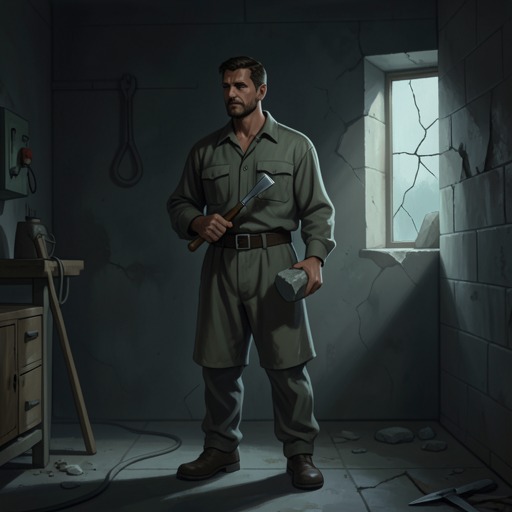
In 1943, after Italy capitulated, the old Slovene Communist revolutionary Joe Jurani led Yugoslav prisoners in a rebellion at a concentration camp on Rab Island. Under his leadership, 2,000 starving prisoners disarmed 2,200 Italian soldiers. After the war, Jurani was arrested and imprisoned on nearby Goli Otok, a Communist concentration camp. In 1953, he and other prisoners were mobilized to build a monument commemorating the tenth anniversary of the Rab rebellion—the revolt he had led. The reversal makes Yugoslavia’s landscape carry a political irony: a revolutionary, now captive to the new regime, is made to help memorialize his own act of resistance.
Student Protest and Party Response
In the early 1970s, large student demonstrations in Yugoslavia raised demands for democracy and criticized Communist policies that, in the protesters’ view, favored newly wealthy technocrats. The Communist counterattack suppressed opposition but was also justified by the claim that the authorities had heard the students’ message and were meeting their demands. The episode shows how a governing party could appropriate the language of protest even as it shut down the people making it. The book identifies this as a tragic misunderstanding for a left opposition seeking radical economic policies alongside direct democracy.
Slovene Intellectual Life
The book also recalls the Slovene philosophical scene in the old Yugoslavia of the late 1960s and early 1970s. Its dominant division was between official Marxists associated with the Frankfurt School and dissident followers of Heidegger. The appearance of French structuralism briefly unsettled that opposition: the two camps, described as mortal enemies, began speaking a common language against it. The recollection presents intellectual alignment as historically contingent, capable of shifting when a new theoretical adversary changes the terms of debate.
Political Memory and Contradiction
Across these examples, Yugoslavia is not treated as a static backdrop. The account connects revolutionary action, imprisonment, commemoration, student dissent, and intellectual rivalry to the unstable relation between a movement’s emancipatory claims and the institutions that inherit them. Jurani’s monument concentrates that tension in one scene; the protests and philosophical disputes show it recurring in public and intellectual life.